REVERSE ENGINEERING
This is done in the absence of original Part specifications, Solid Model and drawing set. The goal is to take an existing component, and create a Solid Model and drawings for it. It is a job of accurate measurement and sensible interpretation to recreate the original design.
This happens, for example, when an injection mold, for an ongoing product, comes to the end of its useful life. The mold develops fatigue cracks and wear, causing the Part it produces to fall out of specification. The injection mold must be recreated and the owning company does not have the original specifications (often after a decade or more). This type of reverse engineering job is very common.
Interpretation is needed because the part being measured is
typically from the latest production run, when the old mold was starting to
produce parts out-of-spec . There are some practical decisions considering how
the mold distorted over time, and how the mold in new condition could have varied
in tolerance from the original design.
Even if the original drawings were saved, then changes in the Part by
the mold maker, for the mold s sake, may not have been.
Reverse engineering is not typically needed for components that are machined directly. It is for production to machine the custom tooling (dies, molds, casts) needed by other manufacturing methods. All tools have a limited life, so replacement of production tooling happens.
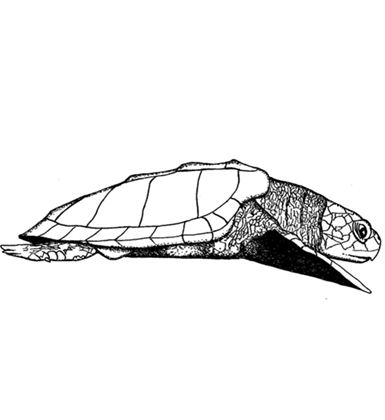
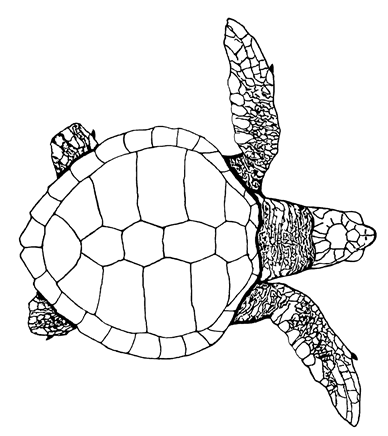
Back in the 1990s, researching sea turtles, this aerospace engineer couldn t help but notice the aero shape of the turtle. The reverse engineering job involved measurements and photographs of multiple turtles to determine the body s airfoil shape and then lift/thrust/drag characteristics. The cambered airfoil shape from nose to rear of the shell is seen in the side view. The elliptical planform is seen from the top view. This model of flight efficiency, the Kemp s Ridley turtle, lent itself as a good name for the company, one that values efficiency.